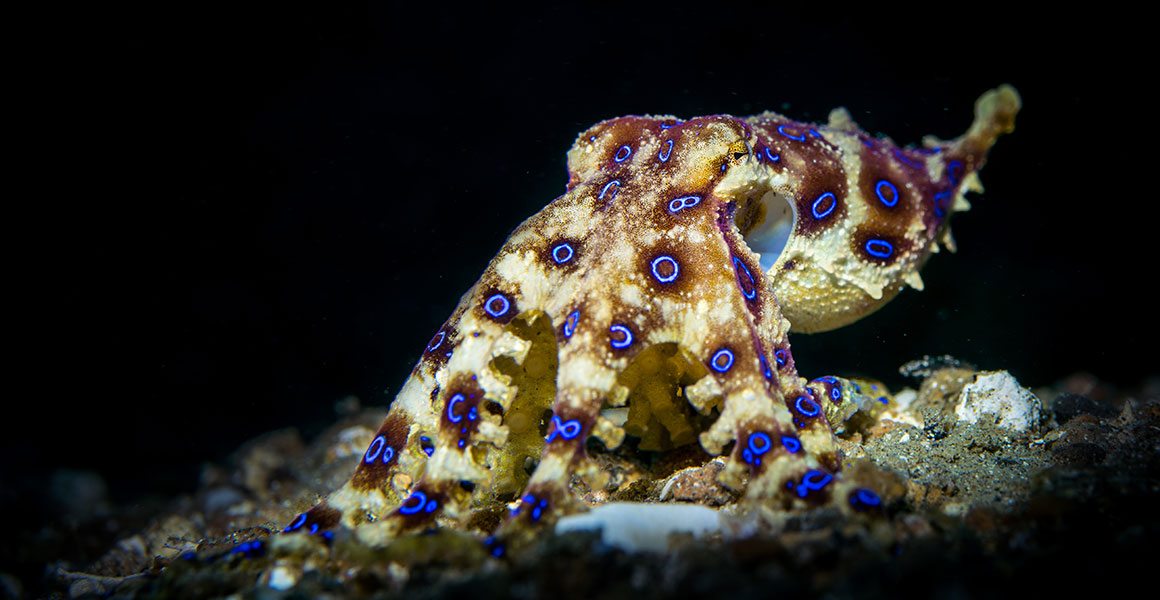
When exploring the underwater world, the allure of vibrant marine life often overshadows the lurking dangers. Among the ocean’s most deceptive threats is the poisonous octopus, particularly the notorious blue-ringed octopus. With its glowing rings and miniature size, it seems more like a collectible toy than a deadly predator. However, one bite from this creature can be fatal. In this guide, we’ll cover how dangerous these octopuses are, what symptoms to expect if bitten, and the life-saving steps to take in an emergency.
What Makes an Octopus Poisonous
Not all octopuses pose a threat to humans, but a select few carry venom potent enough to kill. The blue-ringed octopus is the most infamous example, found primarily in the Indo-Pacific region, including Indonesia, the Philippines, and northern Australia. Despite its small size, often no bigger than a golf ball, it carries a venom called tetrodotoxin, which is 1,200 times more toxic than cyanide. This neurotoxin targets the nervous system and can rapidly shut down bodily functions.
Interestingly, tetrodotoxin is not produced by the octopus itself but by bacteria in its salivary glands. The venom can paralyse muscles, including those responsible for breathing, which makes this animal far more lethal than it appears. Divers who visit biodiversity hotspots such as those near Lembeh Resort are sometimes fortunate enough to observe blue-ringed octopuses in the wild. This experience is both breathtaking and a sobering reminder of the ocean’s hidden dangers.
How a Poisonous Octopus Delivers Its Bite
A poisonous octopus doesn’t lunge or chase its prey. Instead, it uses a sharp, parrot-like beak located beneath its body to inject venom. When threatened, it bites swiftly and delivers the toxin directly into the bloodstream. Surprisingly, the bite may feel like a minor pinch or go completely unnoticed at first. This deceptive painlessness can delay treatment and worsen outcomes.
Most bites happen when humans accidentally handle or step on the octopus while snorkelling, wading, or exploring rocky coastal areas. Its small size and camouflaging abilities mean it often blends into sand, coral, or debris until it feels threatened, when it reveals its iridescent blue rings, a final warning before it attacks.
Read also: Where Poisonous Octopuses Live and How to Avoid Them
Symptoms of a Poisonous Octopus Bite
The effects of the venom can escalate rapidly. In many cases, symptoms develop within minutes. Here’s what to look for:
Common symptoms include:
- Numbness and tingling around the bite area
- Muscle weakness or paralysis
- Nausea and vomiting
- Difficulty speaking or swallowing
- Blurred vision or double vision
- Respiratory failure due to muscle paralysis
- In severe cases, death from asphyxiation
Because the bite can initially seem harmless, victims may not realise they’re in danger until breathing problems begin. This makes it critical to act quickly and seek emergency help even if symptoms aren’t immediately present.
How Dangerous Is the Bite Really
Despite their potent venom, bites from poisonous octopuses are sporadic. These creatures are not aggressive and prefer to flee rather than fight. Fatalities have occurred, but they are few and typically the result of delayed medical attention or failure to recognise the danger.
However, the danger lies in the speed and silence of the symptoms. Tetrodotoxin can cause full paralysis in under 30 minutes, and without artificial ventilation, respiratory failure can lead to death. The lack of available antivenom adds to the urgency, making every second count. For oceanfront resorts and dive centres such as Lembeh Resort, providing marine safety briefings is standard practice to ensure divers are aware of these risks without fearmongering.
First Aid for a Poisonous Octopus Bite
If you suspect a poisonous octopus has bitten someone, do not wait for symptoms to worsen. Immediate action can mean the difference between life and death. Follow these critical first aid steps:
- Call Emergency Services (911 or your local number)
- Clearly state that it may be a blue-ringed octopus bite.
- Clearly state that it may be a blue-ringed octopus bite.
- Keep the Victim Calm and Still
- This helps slow the spread of venom through the bloodstream.
- This helps slow the spread of venom through the bloodstream.
- Apply a Pressure Immobilization Bandage
- Use a wide bandage to wrap the affected limb snugly. Immobilize the limb using a splint if available.
- Use a wide bandage to wrap the affected limb snugly. Immobilize the limb using a splint if available.
- Do Not Cut or Suck the Wound
- These outdated methods are ineffective and may cause more harm.
- These outdated methods are ineffective and may cause more harm.
- Be Prepared to Perform CPR
- If the victim stops breathing, begin CPR and continue until medical help arrives.
Quick response and proper technique can sustain the victim long enough for professional treatment to begin.
Medical Treatment and Recovery
In a hospital setting, the primary focus is to support the patient’s breathing. Mechanical ventilation is often necessary until the toxin wears off, which can take several hours. Since tetrodotoxin does not affect brain function, patients are typically conscious and aware but unable to move or speak, a terrifying experience without reassurance and support.
Doctors will closely monitor heart and respiratory function and administer fluids or medications as needed. With timely intervention, most patients make a full recovery without permanent damage, though the psychological effects of the experience can be long-lasting.
How to Avoid Being Bitten by a Poisonous Octopus
The best way to stay safe is through education and awareness. These octopuses aren’t hunting humans, and bites are easily avoidable with the proper precautions.
To avoid being bitten:
- Never handle unknown marine animals, no matter how beautiful or harmless they appear.
- Be cautious in tide pools and shallow reef areas where octopuses may hide.
- Look for blue rings, a visible warning sign that the animal feels threatened.
- Wear gloves and proper footwear when exploring coastal environments or diving.
- Avoid blindly touching coral or rocks, especially in areas where venomous species are known to live.
Travellers and divers should always attend local safety briefings, especially in biodiversity hotspots where rare species, both beautiful and deadly, coexist in shallow waters.
Real-Life Example
In 2021, an Australian tourist vacationing in Bali unknowingly picked up a blue-ringed octopus while collecting shells. Within minutes, she reported dizziness, muscle weakness, and shortness of breath. Quick-thinking beachgoers called for medical help while applying pressure to her arm. By the time paramedics arrived, she was struggling to breathe. Thanks to fast emergency intervention, including CPR and oxygen, she survived the ordeal. The incident was widely covered in local media and serves as a reminder of how small creatures can pose significant threats.
Conclusion
The poisonous octopus, especially the blue-ringed species, is a paradox of nature, tiny, beautiful, and lethally dangerous. While encounters are rare and attacks even rarer, the consequences of a bite are severe and demand immediate action. By learning to recognise these creatures, understanding their venom, and knowing what to do in an emergency, you can enjoy the ocean with confidence and care.
Whether you’re snorkelling at your local beach or diving in world-class locations like those around Lembeh Resort, always respect marine life and never assume small means safe. A little knowledge goes a long way, especially when the stakes are this high.