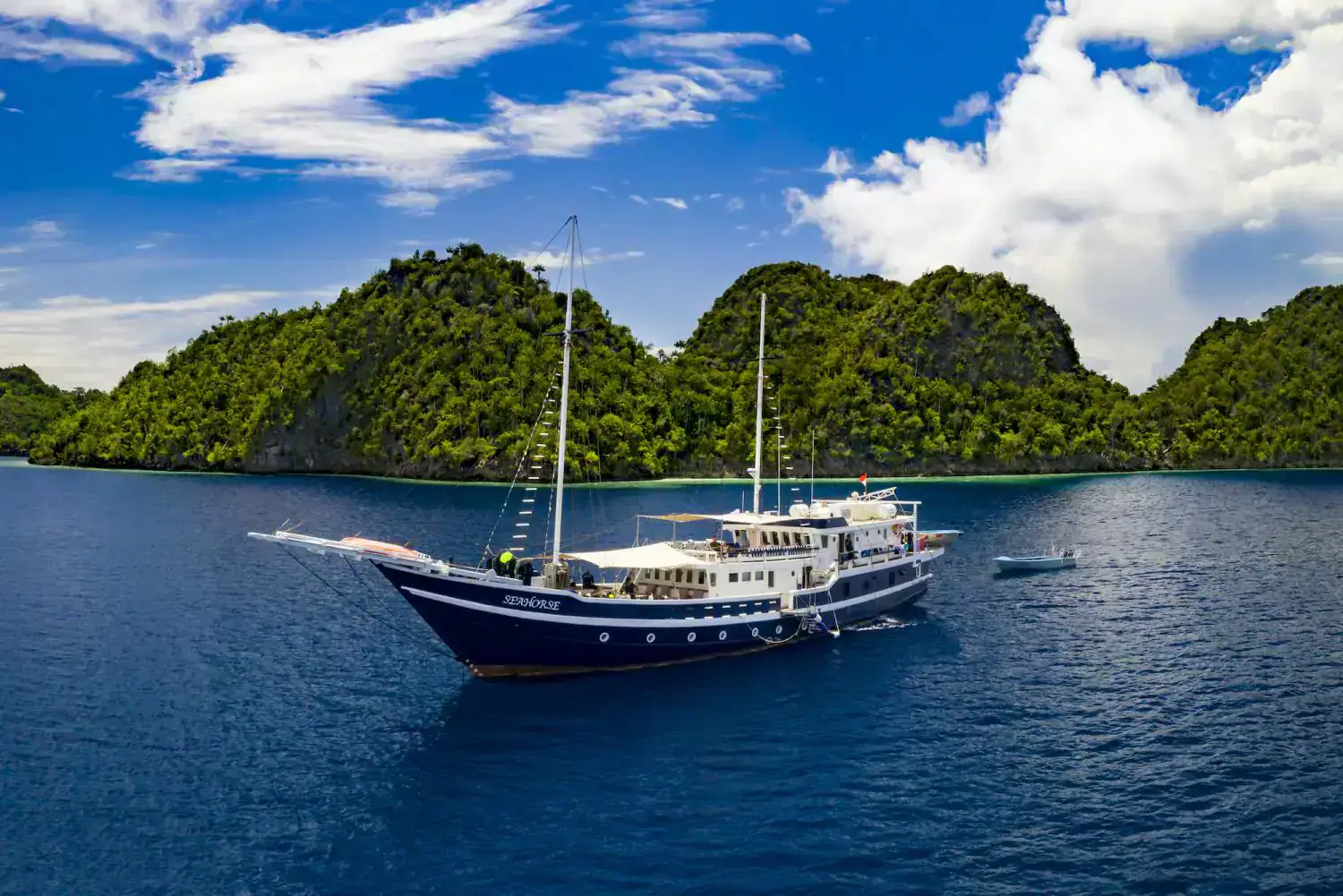
Aboard the Seahorse liveaboard, choosing the right trip length can shape how much of Komodo you actually experience. A liveaboard dive trip is not simply about fitting in more dives; it is about giving yourself enough time to move between northern, central, and southern Komodo, adapt to currents and weather, and still enjoy the islands above water. For divers researching Komodo Island diving, the practical question is not “How many dives can I do?” but “How many days will let me experience Komodo without rushing?”
Why Does Trip Length Matter in Komodo?
Komodo is a destination where geography and conditions matter. Wallacea operates its Komodo itineraries from June to October, and conditions can vary significantly across the region. Its published itineraries indicate water temperatures of around 28°C in the north, while southern waters can fall to approximately 22°C. Currents are also an important consideration when choosing dive sites.
That variety is one reason diving in Indonesia cannot always be planned like a resort holiday. A diving liveaboard moves with the conditions, allowing guides to select sites based on currents, tides, visibility, and weather rather than adhering to a rigid daily schedule.
The more days you have, the more flexibility there is to balance famous sites with quieter reefs, night dives, shore visits, and navigation.
Is Four to Five Nights Enough for Komodo?
Four or five nights can work for travelers with limited time, especially when an itinerary concentrates primarily on Komodo National Park. It can provide a strong introduction to Komodo diving, but the schedule will naturally be tighter.
A shorter liveaboard dive trip may focus on selected dive areas, with less room for weather changes, extended exploration, or additional islands outside the park. It may suit experienced divers who already know what they want to see or travelers combining diving with a longer Bali or Flores holiday.
Anyone choosing a short itinerary should compare actual diving days rather than simply counting nights. Embarkation, navigation, and disembarkation can reduce the number of full days available underwater.
Are Seven to Eight Nights the Sweet Spot?
For many divers, seven to eight nights offers a comfortable balance between underwater time and travel pace. A seven-night liveaboard dive trip creates more opportunities to experience different reef environments without making every day feel like a transfer.
Travelers searching for diving in Komodo often focus on individual names such as manta sites or famous current dives. In reality, having several days available can be valuable because the most suitable site on any given day can depend on currents, tides, visibility, and other conditions.
This trip length can also provide more room for activities above water. Wallacea’s Komodo itineraries can incorporate experiences such as ranger-station visits, Padar viewpoints, Pink Beach, kayaking, and time ashore, depending on the route and conditions.
A well-planned diving boat therefore becomes more than transportation. It acts as a moving base connecting different dive zones while accommodation, meals, equipment preparation, briefings, and navigation happen around the diving schedule.
Why Can 10 or 11 Nights Be Better?
For divers traveling a long distance to Indonesia, 10 or 11 nights can offer substantially more depth, particularly when the route extends beyond Komodo toward Sumbawa or Bali.
Wallacea’s published 10-night Labuan Bajo-to-Bali Seahorse itinerary provides a useful example. The 11-day journey includes Komodo, Banta, Sangeang, Moyo, and the Gili Islands, with at least 33 dives planned, including at least five night dives. A published 11-night Bali-to-Labuan Bajo itinerary offers at least 36 dives.
That is where a liveaboard dive trip starts to feel more like an expedition than a series of local dives. Extra time can introduce volcanic-sand macro sites, walls, pinnacles, coral gardens, drift dives, and opportunities for larger marine encounters into a single journey.
For guests interested in luxury liveaboard diving, additional nights provide more time to enjoy life aboard rather than treating the vessel simply as a place to sleep between dives.
What Should Divers Consider Before Choosing the Number of Days?
First, consider your diving experience. Komodo is known for currents, and Wallacea states that its guides check current conditions before dives so sites and timing can be adjusted when necessary.
Second, decide what you want from the journey. If your priority is a concentrated selection of Komodo sites, a shorter route may work. If you also want night diving, shore activities, varied underwater landscapes, and neighboring islands, additional days become more valuable.
Third, examine the actual route rather than only the number of nights. A diving yacht traveling between Bali, Sumbawa, and Komodo requires navigation time, whereas an itinerary concentrated around Komodo can dedicate more of its schedule to one region.
Finally, compare what is included. Wallacea’s published Seahorse itineraries include guided dives with a maximum ratio of one guide for four divers, Nitrox, accommodation, meals, transfers between the airport and vessel, tanks, weights, and belts. These practical details matter when comparing the best diving liveaboard options for your trip.
So, How Many Days Do You Really Need?
If time is limited, four to five nights can provide a focused introduction. Seven to eight nights is a stronger option for travelers seeking a broader experience at a comfortable pace. For divers seeking maximum variety, greater itinerary flexibility, and the option to combine Komodo with Sumbawa or Bali, 10 to 11 nights can be especially rewarding.
There is no universal perfect number. The right duration depends on your experience, travel time, preferred pace, and whether you want to concentrate solely on Komodo or make the journey part of a wider diving liveaboard expedition.
Before booking, compare full diving days, planned regions, expected number of dives, navigation time, and non-diving activities. Those details will tell you far more than the number of nights alone—and help you choose a journey that feels immersive rather than rushed.